


Usually, the audio is a premium subscriber perk. For this article, it’s free
The earth is full of light, which means the stars are hard to see. I’ve only truly witnessed them in two places: Khost, Afghanistan and Stanley, Idaho. You see why the ancients named it the Milky Way when it’s blackout dark like that. A band of light, and each light is a star, and that’s only what we can see.
Those stars were there long before we were born and will be there long after we die.
The ocean is younger than the stars, but still unfathomably old. Its rhythm gave birth to us, that back and forth energy combining in just the right way with just the right molecules to create something that reproduced. Something that persisted. And that tiny barely-alive thing, over billions of years, became us. And someday we will die and life will continue. The planet has had mass extinction events before and life has continued in some form. Life will continue to continue. There is simply too much of it to stop.
The trees are younger than the ocean, but the big ones, the ancient ones, were here millennia before our civilization began. The oldest tree alive that we know of is a 4,850-year-old bristlecone pine that lives somewhere in the Inyo National Forest of California. Most people don’t know which one it is. There was an older one, but someone cut it down in the 1960s, and so the tree people have kept this one secret to preserve it. It’s very sad that such measures are necessary, but also beautiful that the tree people have done this, and that no one is upset. We would rather keep the tree safe and know it’s there than see it for ourselves. Nearly every person understands the need to protect this tree; only a handful would ever dream of hurting it. We have named the tree Methusela. We name trees, that’s something we do as a species.
There may be an older tree somewhere in those same mountains, but the last man who knew its location died in 2013 and left no clues behind. Core samples show that it was over 5,000 years old. It is likely still out there, growing in the forest, surrounded by birdsong and squirrels and the wind whistling through the branches of its ancient neighbors. This lost tree is about as old as the concept of writing. All of recorded history spans that tree’s lifespan. We rise and fall, but it endures.
There are astronauts in space right now. They are about to be farther away from earth than any human has ever been.
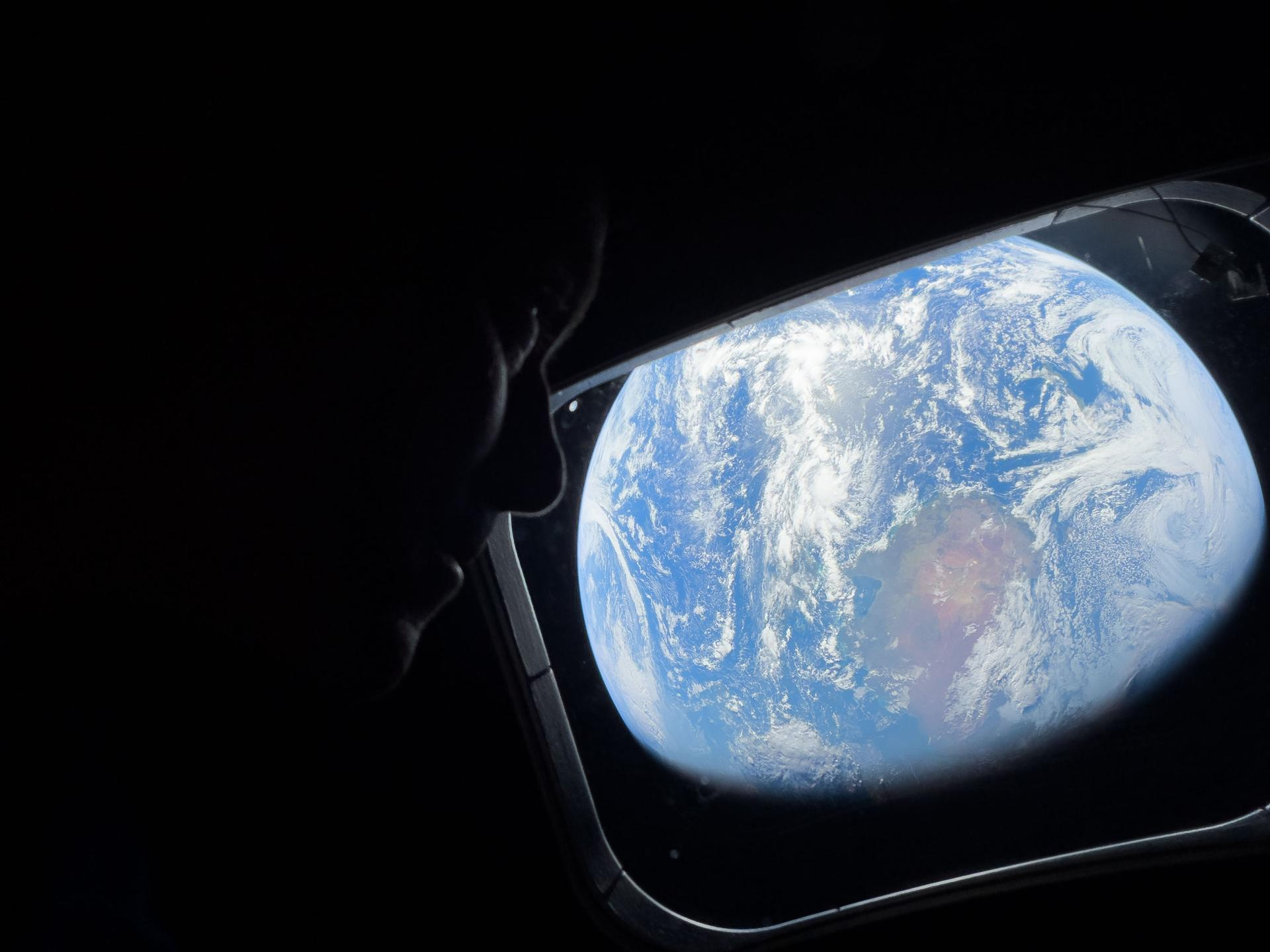
The people in space are driven and talented, they might be the best of us, and they are also just people. They look like people you know. You can and should watch them speak to ABC in this video. It’s wonderful. They are so happy to be in space.
We did that. Every single person who pays taxes helped make this happen. So many people worked so hard, for so long—not just on the Artemis rocket, but on getting into space at all. From the ancient people who gazed up at the moon and wondered what it was, to the astronomers who charted its course with stone tools, to the scientists who hypothesized and tested and hypothesized again, to the physicists who figured out how to break free from earth’s orbit, to the first madman to strap himself into a rocket and blast himself into the unknown, knowing he would either get to space or die or both. Millennia of discovery behind this one perfect moment.
The news anchor asked the astronauts if they had any message for our divided, fucked planet. You’ve heard part of the quote probably, but maybe you haven’t heard the whole thing. Here it is:
“Trust us, you look amazing. You look beautiful. And from up here, you also look like one thing. Homo Sapiens is all of us. No matter where you’re from, or what you look like, we’re all one people.
You know, this mission—one of the things that’s amazing about being around, and just being an astronaut serving our countries at this time, is that we get to to give ourselves a mission that we can hold onto. To say: “Hey, look at what we did” for the rest of our lives.
We call amazing things that humans do moonshots for a reason. Because this brought us together and showed us what we can do when we put—not just putting our differences aside; when we bring our differences together, and use all the strengths to accomplish something great.
And so this mission will give us one of those that we all can remember and hold onto for the rest of our days. And so I hope people will tune in, and give us a chance.
I write about politics, allegedly, and there’s certainly been no shortage of those recently. There are a lot of things I should be writing about, and I will. But today, I would like to take a moment to appreciate the miracle of the universe we live in. The absolute beauty of the reality we occupy. We live, we suffer, we die, and we are part of something so enormous, and we are no less important because we are so small and our lives so brief. We are not visitors to this wonderful place. We do not stand apart, gazing at the majesty of the cosmos from some remove. We are the cosmos, and always have been. We are part of a beautiful legacy, and that legacy will continue long after we are gone.
We cannot forget, in the midst of all this ugliness, how valuable and precious life is. How wonderful to see the world, the planets, the galaxies. How lucky we are to taste the air, to be alive, to see the trees and the stars and the buildings our human ancestors built, from the cathedral of the Manhattan skyline to the cliff dwellings of Colorado. We’ve met dogs. We’ve met cats. We’ve seen animals Herodotus could only dream of. We’ve met each other. Good people, bad people, everything in between. There have been moments of beauty. There have been moments in your life when all the world seemed good.
This Substack is usually not like this article at all, but you are welcome to subscribe anyway
Once upon a time I fancied myself a writer. I was working three jobs to pay rent in one of our most expensive cities. The pandemic took hold of us and I fled that state. Everyone became a writer. I fell silent. "Just an old white woman with an axe to grind" kept me somewhat isolated and anxious until I understood that the world was paying me no mind. I slipped out of my body of pain (It's only pain) and started living my life as very young once more. It began with the trees reminding me that I have always sheltered in their branches with my book stack, watched their leaves shimmer back and forth in the breeze, and everywhere I wandered was filled with magnificent beauty. Gradually as nature brought me back I started to smile again and say "hello" to fellow hikers. I left my little studio and joined our earthly tribe, as me, the true me, in love with the stars and rain and clouds and birds by the thousands, flowers by the hundreds, and from my wee balcony . . . all of life unfolding with grace, determination, and joy. yeah. I am serious. On the eve of what some are saying will be our end, I find your essay and it all falls into place. Your writing moves me greatly every single time. You are reminiscent of Carl Sagan's :The Pale Blue Dot" and you help me continue-trusting what comes, considering the grandness of it all, the precision of it all, and reclaimng my place where our shared humanity celebrates all the good we embody. I'll put my axe down for a little while and listen to those joyful astronauts once again. I am so glad you are you and you share your writing, and THANK YOU. PEACE, LOVE, AND HAPPINESS ALWAYS.
I needed this today, thank you.